Verse to on the Road Again Willie Nelson

Information technology's Willie Nelson's altogether, and in honor of his 89th spin around the sun, he's got a brand new album out chosen A Beautiful Fourth dimension. Nelson, a.chiliad.a. The Blood-red Headed Stranger, is famous for tons of different reasons beyond music — he's got his own cannabis brand, and he'southward politically active on lots of unlike fronts. He's been a supporter of marriage equality, fauna rights, and recently even updated his song "I'll Be Seeing You" as a PSA for COVID-19 vaccination efforts.
At his core though, Willie Nelson is a songwriter. His new single, "I'll Beloved You Till the Day I Die," is just the latest gorgeous tune in an outrageously productive career. Nelson got started dorsum in the early 1960s, writing songs that other artists made famous, simply A Cute Time, amazingly, is Nelson's 72nd solo studio album — you lot don't have to bust out the calculator to figure out that ways he's been putting out, on average, more than one album per year seemingly since the dawn of time. That'due south a lot of songs.
With that in mind, let's take a tour of some of the best covers of Willie Nelson'south songs. In that location may be no better tribute to a bang-up songwriter than to accept a look at the songs they wrote that were iconic in the careers of other artists. With Nelson, that's a long list, simply here are 5 of the best ones.
"Crazy," Patsy Cline (1961)
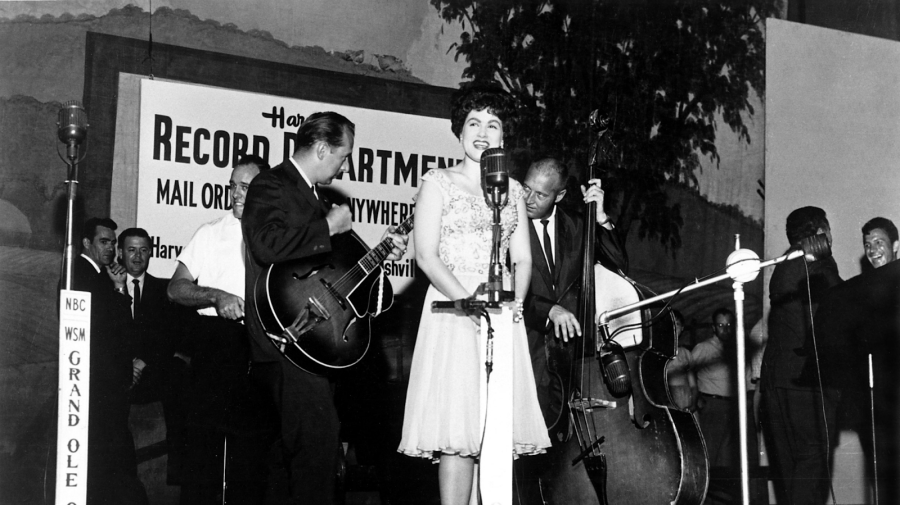
When producer Owen Bradley brought the demo for "Crazy" to Patsy Cline, she wasn't impressed. Willie Nelson was not a well-known artist at the time, but Bradley felt that the song would be a proficient choice for Cline. She gave information technology a shot, despite withal suffering from the furnishings of a serious car accident the month before that nearly killed her and her blood brother.
On the showtime laissez passer, Cline cut the session curt, maxim she couldn't sing upwardly to her standards, just she returned days after and recorded the vocals, legendarily, in but i take. The recording became and so popular that for a long time information technology was the second almost popular vocal on jukeboxes in the U.S., just behind Elvis Presley's "Don't Be Brutal." It's an aching, gorgeous vocal. It's been covered past everyone from Linda Ronstadt to Diana Krall, and Willie himself has recorded it too, but Cline's version is the 1 that rises above all the rest.
"Funny How Time Slips Away," Al Light-green (1973)
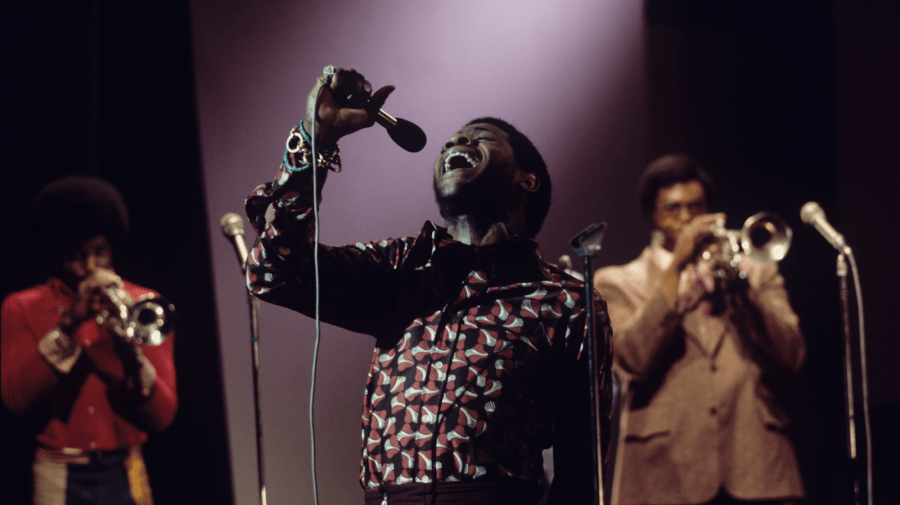
Willie Nelson wrote "Funny How Fourth dimension Slips Away" along with "Crazy" in just one week, according to legend. This song has been a huge striking for lots of different artists, merely just equally impressively, it'south been a hitting for artists in different genres. Listening to the original land version by Baton Walker and Brian Ferry'southward bizarre 1974 version back-to-back will brand you lot feel like yous're listening to ii totally unlike songs.
It'due south Al Green'due south version though — off his 1973 anthology Call Me, which also includes a encompass of Hank Williams' country masterpiece "I'm So Lonesome I Could Cry" — that's my favorite. The way Green lets the song slowly build to a crescendo over the form of a total five minutes is simultaneously incredibly moving and really fun. Green makes information technology entirely his, but that's likewise a credit to the malleability of the song — and to the elementary, universal appeal of its bulletin.
"Night Life," Aretha Franklin (1967)
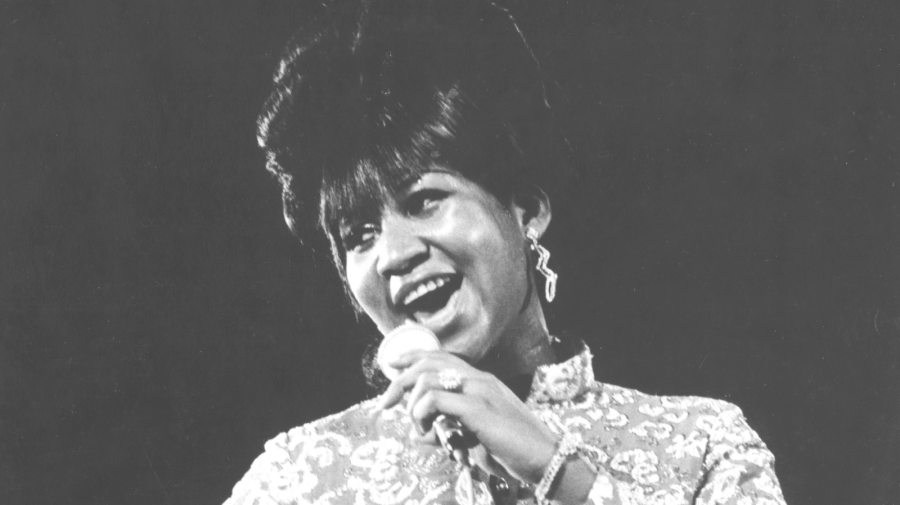
It's then hard to choose simply one encompass of "Nighttime Life," a vocal Willie Nelson wrote in the belatedly 1950s in Texas. It seems similar every songwriter ends upwards getting effectually at some point to writing a song about how life in show business isn't easy, and this is one of the greats of that theme. That's probably why so many artists take taken a shot at recording it. From Marvin Gaye to B.J. Thomas, at that place are endless excellent renditions.
Aretha Franklin's version is the ane that stands out almost, though. Ostensibly a song almost a quiet, lone moment, Franklin's singing has a kind of defiance to it. When she sings, "Listen to the blues and what they're saying," information technology cuts right to the heart. You can't help only do what she says. It's globe'southward away from the quiet, resignation of Nelson'south version; both are gorgeous, but Franklin's is explosive and anthemic.
"Pitiful Songs and Waltzes," Cake (1996)

One of my start introductions to the songs of Willie Nelson was this embrace of "Sad Songs and Waltzes" from Cake'south 1996 album, Fashion Nugget. This vocal, which Willie Nelson wrote for his 1973 album, Shotgun Willie, is one of those tunes that feels like it was destined to have been written at some betoken. It's such a simple idea — the vocaliser lamenting the fact that the song he's singing probably won't ever be heard past the person he needs to hear it. It's a bang-up song nigh a feeling we all know well: feeling bad for yourself. Sometimes you need a song to see y'all through.
Cake'due south version is somehow both heartfelt and tongue-in-cheek — a flim-flam they pulled off elsewhere on Fashion Nugget with their even more than famous cover of Gloria Gayner's "I Will Survive." The sad, lonesome trumpet along with the tiresome waltz rhythm in "Sad Songs and Waltzes" is just perfect. Listening to this song, y'all feel like you lot're alone in your room feeling lousy, but, like, in a good fashion!
"Pretty Paper," Roy Orbison (1963)
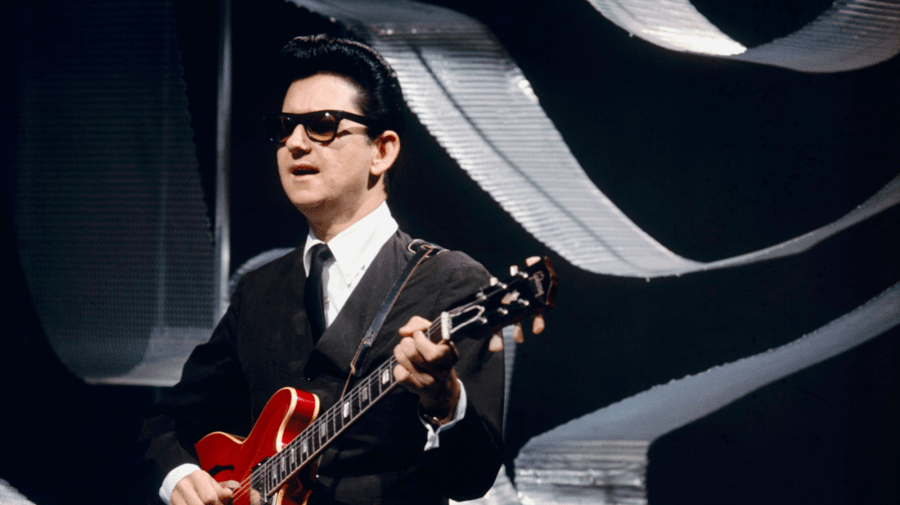
"Pretty Newspaper" is a petty phenomenon of a song — i of the rare Christmas standards that somehow works as a regular ballad, too. The song, written in 1963, is about a disabled man Willie Nelson oft saw years earlier selling newspaper and ribbons on the sidewalk in Fort Worth, Texas. The human being would shout, "Pretty newspaper!" to get the attention of passersby, and Nelson always found it all very moving.
Orbison'due south version of this song showcases his astonishing and unusual voice, all while working as a perfect Christmas vocal that's full of ascension strings and what sounds like a chorus of angels singing backup harmonies. Willie'southward ain version, of course, is a piddling more pensive and understated, and it's gorgeous, but Orbison's version is the reason this song became a Christmas classic.
Source: https://www.ask.com/culture/willie-nelson-songwriter-best-covers?utm_content=params%3Ao%3D740004%26ad%3DdirN%26qo%3DserpIndex

Post a Comment for "Verse to on the Road Again Willie Nelson"